
peter @aimyskin.com
+86-18031361872
- All
- Product Name
- Product Keyword
- Product Model
- Product Summary
- Product Description
- Multi Field Search
Views: 126 Author: Site Editor Publish Time: 2026-03-30 Origin: Site


Skin concerns often look similar at first glance, yet the underlying causes can be completely different. A person with oily skin may also experience dehydration, while another may have pigmentation that is invisible under normal light. This is why the Skin Analyzer has become an essential device in professional skincare consultations. Rather than relying only on visual observation, beauty professionals can use advanced imaging and analysis tools to understand the skin more accurately. With detailed reports and clear visual results, a Skin Analyzer helps salons, aesthetic clinics, and skin care centers provide more personalized treatment recommendations and more convincing consultations.
Traditional skin consultations relied heavily on experience and visual judgment. While experienced professionals can identify many skin concerns, the human eye has limitations. Subtle pigmentation beneath the skin surface, early-stage dehydration, or UV-related damage may not be easily visible.
Without proper diagnostic support, two clients with very similar-looking skin may receive the same recommendations even though their actual conditions differ. This can reduce the effectiveness of skincare treatments and make consultations less precise.
A Skin Analyzer changes this process by providing a structured and data-based evaluation of the skin. Instead of relying solely on subjective interpretation, professionals can observe multiple layers of skin information through advanced imaging technologies.
Modern skincare consumers are increasingly knowledgeable and curious about their skin health. Many clients want to see clear explanations and visual evidence before committing to treatments or products.
A digital analysis device allows professionals to show clients detailed images and measurable indicators of their skin condition. Seeing pores, hydration levels, pigmentation patterns, and wrinkle development visually makes the consultation more understandable.
When clients can clearly see what is happening beneath the surface of their skin, they are more likely to trust the recommendations given by skincare professionals.
For beauty businesses, consultation quality directly influences client satisfaction and repeat visits. A structured skin analysis process helps professionals communicate more clearly and confidently.
Instead of generic advice, treatment plans can be customized according to real skin conditions. This improves the professionalism of the service and helps clients feel that their skincare journey is personalized.
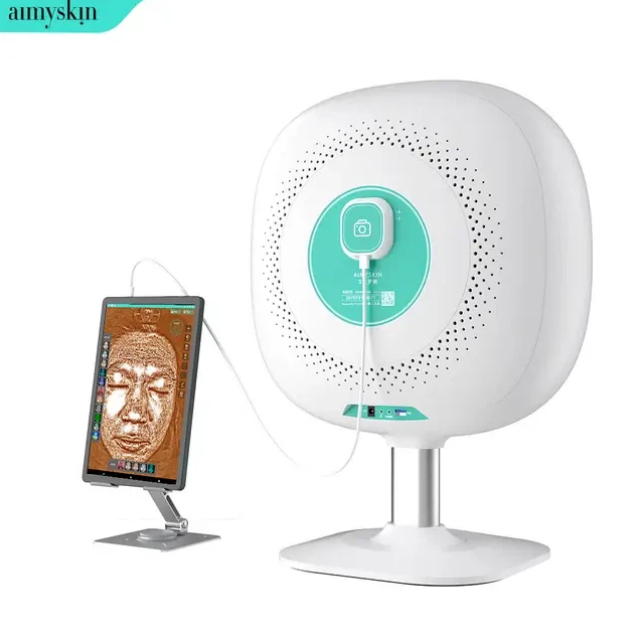
A Skin Analyzer is a professional device designed to evaluate different aspects of skin condition using imaging technology and digital analysis. The device captures detailed facial images under controlled lighting conditions and analyzes various skin indicators through specialized software.
The result is a visual and data-based report that helps professionals understand the client’s skin type and concerns more clearly.
A basic skin check usually involves manual observation, asking questions about skin concerns, and examining visible symptoms.
Digital analysis goes further by combining high-resolution imaging with analytical algorithms. It allows professionals to see details that are not visible to the naked eye and quantify certain skin characteristics.
This difference transforms the consultation from an observational process into a diagnostic process supported by technology.
Professional skin analysis systems come in different formats to meet various service environments.
Portable analyzers are suitable for mobile consultations or small treatment rooms. Desktop models are commonly used in skin management centers and clinics where detailed reports are required.
More advanced systems may integrate artificial intelligence analysis, 3D imaging, or multi-spectral lighting to capture deeper layers of skin information.
One of the most important roles of a Skin Analyzer is identifying multiple skin conditions in a single evaluation.
Healthy skin requires a balanced level of moisture and oil. A digital skin analysis device can detect whether the skin surface is dehydrated, excessively oily, or uneven in moisture distribution.
This information helps professionals recommend suitable skincare routines and treatments.
Pore size, skin texture, and acne-related irregularities can be evaluated more precisely through high-resolution imaging. Even minor surface changes can be captured and compared over time.
Tracking these indicators helps professionals monitor treatment progress and adjust skincare strategies.
Pigmentation concerns such as sun spots, uneven tone, and early UV damage may develop gradually. Advanced imaging methods allow professionals to detect these issues before they become clearly visible.
Early detection is valuable for preventive skincare and targeted treatments.
Skin aging is often a combination of multiple factors, including collagen loss, dehydration, and environmental stress.
By examining fine lines, wrinkle patterns, and skin elasticity indicators, professionals can better understand the stage of aging and recommend appropriate rejuvenation treatments.
Sensitive skin conditions can also be analyzed more objectively. Areas of redness or irritation may indicate underlying sensitivity issues.
A clear visualization of these areas allows professionals to recommend gentler products and more suitable treatment plans.
Beauty salons often serve many clients each day. A structured analysis process helps shorten consultation time while maintaining accuracy.
Instead of long discussions about possible skin concerns, the device provides visual results that allow professionals to explain conditions quickly and clearly.
Aesthetic clinics often offer advanced skincare treatments that require accurate diagnosis.
Detailed skin analysis reports allow practitioners to tailor treatment plans according to the client’s individual needs. This improves treatment effectiveness and client satisfaction.
Skin management centers frequently monitor skin conditions across multiple sessions.
Using digital records from a Skin Analyzer, professionals can compare before-and-after results and demonstrate treatment improvements to clients.
Product recommendations are more convincing when supported by visual evidence. When clients see measurable indicators of their skin condition, they are more likely to follow professional advice.
Accurate skin analysis depends heavily on image quality. Professional analyzers often use controlled lighting systems and multiple light modes to reveal different aspects of the skin.
This ensures that the captured images are clear, consistent, and suitable for analysis.
The value of a Skin Analyzer does not come only from image capture. The software plays an important role in transforming raw data into understandable reports.
Clear visual charts, highlighted areas of concern, and simple scoring systems make the results easier for both professionals and clients to understand.
Consistency is essential for monitoring progress. A reliable analyzer provides comparable results across different sessions.
This allows professionals to track improvements or changes in skin condition over time.
Beauty professionals often work in fast-paced environments. A well-designed analyzer should be easy to operate, allowing staff to conduct consultations efficiently without complicated procedures.
Skin Concern | What the Analyzer Shows | Why It Matters in Consultation |
Hydration | Moisture distribution across facial areas | Helps recommend hydration-focused treatments |
Oil balance | Sebum levels on the skin surface | Guides product selection for oily or combination skin |
Pigmentation | Dark spots and uneven tone patterns | Supports targeted brightening treatments |
Texture | Pore size and surface irregularities | Helps design treatments for smoother skin |
Wrinkles | Early fine lines and aging patterns | Allows preventive anti-aging strategies |
Clients often struggle to understand professional skincare terminology. Visual analysis reports make complex skin conditions easier to explain.
When clients see images and highlighted areas of concern, they can quickly understand what is happening with their skin.
No two individuals have identical skin conditions. A digital analysis system allows professionals to create customized skincare plans rather than using generic routines.
This personalized approach improves treatment outcomes.
Clients often want to know why a particular treatment is recommended. Skin analysis reports provide clear visual explanations that support professional recommendations.
This transparency strengthens trust between the client and the skincare professional.
A consultation supported by clear skin analysis appears more professional and reliable. Clients feel confident when decisions are based on visible data rather than assumptions.
Xuanzun (Hebei) Medical Technology has more than a decade of experience in the development of artificial intelligence-based beauty and diagnostic equipment. The company integrates artificial intelligence technology, Internet of Things systems, and professional medical research to produce advanced beauty care devices.
Supported by specialized laboratories in medical ultrasound, artificial intelligence, medical optics, and laser technology, the company collaborates with universities, skin hospitals, and skin management centers to design solutions that suit diverse skin characteristics across different populations.
AIMYSKIN devices are designed to support modern skincare consultations by combining advanced imaging technology with intelligent analysis software. Their systems help professionals obtain clearer skin insights, improve consultation quality, and deliver more personalized skincare solutions.
Professional skincare today depends on accurate understanding of skin conditions, and the skin analysis device plays a key role in achieving that goal. By revealing hidden skin concerns and presenting them in a clear visual format, this technology helps beauty professionals make better treatment decisions and provide more personalized skincare solutions. For salons, aesthetic clinics, and skin care centers, integrating advanced analysis tools into consultations can significantly enhance service quality and client trust.
If you would like to learn more about professional skin analysis solutions, feel free to contact us. Xuanzun (Hebei) Medical Technology is committed to providing advanced skincare diagnostic devices designed for modern beauty businesses. Our team is ready to help you discover how intelligent skin analysis technology can enhance your consultation services and client experience.
1. What does a Skin Analyzer do during a consultation?
A Skin Analyzer captures detailed facial images and evaluates multiple skin indicators such as hydration, pores, pigmentation, and wrinkles. The results help professionals understand the client’s skin condition and recommend appropriate treatments.
2. Who typically uses a Skin Analyzer?
Skin analyzers are commonly used in beauty salons, aesthetic clinics, dermatology centers, and skin management facilities where accurate skin evaluation is important for treatment planning.
3. Can a Skin Analyzer detect hidden skin problems?
Yes. Advanced imaging technologies allow the device to identify concerns such as early UV damage, pigmentation patterns, and dehydration that may not be visible under normal lighting conditions.
4. Why is a Skin Analyzer important for professional skincare services?
It improves consultation accuracy, helps create personalized skincare plans, and allows professionals to visually demonstrate skin conditions to clients, which increases trust and treatment effectiveness.


