
peter @aimyskin.com
+86-18031361872
- All
- Product Name
- Product Keyword
- Product Model
- Product Summary
- Product Description
- Multi Field Search
Views: 138 Author: Site Editor Publish Time: 2026-03-26 Origin: Site


Professional skin consultations today rely increasingly on visual evidence and accurate data. Clients want to understand their skin condition clearly before beginning treatments or purchasing skincare products. This is where the Skin Analyzer becomes an essential tool in modern beauty and dermatology environments. A Skin Analyzer works by capturing detailed facial images under controlled lighting, analyzing those images with advanced software, and converting the results into a clear skin report. Through this process, beauty professionals can evaluate hydration, pores, pigmentation, wrinkles, and other indicators that may not be visible to the naked eye.
Understanding how a skin analysis device functions becomes easier when the process is broken into simple steps. A professional analyzer essentially performs three tasks: capturing skin images, evaluating skin features, and presenting the findings in a structured report.
The first step involves capturing high-resolution facial images. Unlike ordinary photography, these images are taken under carefully designed lighting conditions to reveal specific skin characteristics. Specialized light sources help highlight different layers of the skin surface and make subtle irregularities easier to observe.
The device ensures that the face is positioned at a consistent distance and angle so that the images remain clear and comparable over time. Consistency is extremely important because it allows professionals to track changes in skin condition across multiple visits.
Once the images are captured, the system analyzes patterns within the skin. Some features such as pores and wrinkles are clearly visible, while others such as underlying pigmentation or UV damage require special light conditions to reveal them.
Through multiple image layers, the device compares different signals across the skin surface. This allows the system to highlight areas that require attention and identify patterns that may not be immediately obvious.
After the analysis stage, the device converts the information into a structured report. This report typically includes visual maps, measurement indicators, and summaries that help professionals explain skin conditions to clients.
Rather than presenting raw images alone, the report organizes the findings so that both professionals and clients can easily understand them. This transformation of images into meaningful information is one of the most valuable functions of the system.
Modern skin analysis devices integrate several technologies to capture accurate and comprehensive skin information.
Digital imaging forms the foundation of most analysis systems. High-resolution cameras capture detailed facial images that allow professionals to observe pores, wrinkles, and surface texture.
Advanced camera systems can capture extremely fine details, ensuring that even small variations in the skin structure are visible.
Certain skin conditions are not easily visible under normal lighting. Ultraviolet illumination and other specialized light modes reveal pigmentation patterns, sun damage, and underlying irregularities.
These lighting methods help professionals identify potential skin concerns at an early stage.
Artificial intelligence plays an increasingly important role in skin analysis. AI algorithms can analyze thousands of image patterns and compare them with known skin characteristics.
This allows the system to automatically identify features such as pore density, wrinkle distribution, or pigmentation concentration. AI-driven analysis improves both speed and accuracy during consultations.
More advanced analysis devices include multi-angle imaging capabilities. These systems capture the face from several perspectives, allowing a more comprehensive evaluation of skin contours and structural features.
Three-dimensional analysis is particularly useful for assessing aging patterns and overall skin structure.
A typical consultation with a skin analysis device follows a structured process designed to ensure reliable results.
The first step is positioning the client’s face in front of the imaging system. Proper alignment ensures that the camera captures consistent images.
Many professional analyzers include positioning guides that help the client maintain the correct posture during image capture.
Once the face is properly aligned, the device captures a series of images using different lighting modes. Each mode reveals different aspects of the skin.
Some lighting modes highlight surface texture and pores, while others reveal pigmentation patterns or UV damage. Combining these images provides a more comprehensive view of the skin.
After capturing the images, the device processes the data through analytical software. The software evaluates the images and identifies patterns related to hydration, pigmentation, wrinkles, and other skin indicators.
This stage transforms raw images into structured analysis results.
The final step is generating a skin report that professionals can use during the consultation. The report usually contains visual maps of the face, highlighted problem areas, and indicators of different skin conditions.
With this information, professionals can explain the skin condition more clearly and recommend suitable treatments.
A skin analysis report typically provides several categories of information that help professionals understand the client’s skin condition.
One of the first pieces of information included in the report is the overall skin type. This helps determine whether the skin tends to be oily, dry, combination, or balanced.
Understanding the skin type is important for selecting suitable skincare products and treatments.
The report often evaluates moisture levels and sebum distribution across the skin. These indicators help identify areas where the skin may be dehydrated or excessively oily.
Balanced hydration is essential for maintaining healthy skin function.
Pore size, surface irregularities, and acne-related conditions are also analyzed. The device can detect variations in skin texture that may not be visible during a manual examination.
These insights allow professionals to recommend treatments that target surface smoothness and pore refinement.
Another important part of the report involves evaluating pigmentation patterns and wrinkle formation. Uneven skin tone, dark spots, and fine lines often become clearer through digital imaging.
Understanding these patterns helps professionals design targeted skincare strategies.
One of the greatest advantages of digital analysis is the ability to track skin changes across multiple sessions. By comparing images and reports over time, professionals can evaluate whether treatments are producing the desired results.
This long-term monitoring provides valuable insights for both professionals and clients.
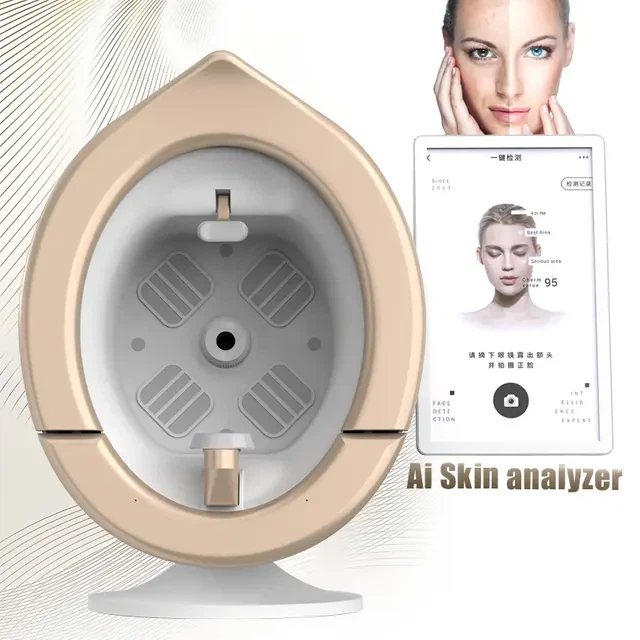
Consistent lighting conditions ensure that each analysis session produces reliable results. If lighting conditions change significantly, it becomes difficult to compare images accurately.
Professional analyzers use controlled lighting environments to maintain consistency across sessions.
The software component of a skin analysis system is responsible for interpreting image data. Sophisticated algorithms analyze the captured images and highlight relevant skin features.
Accurate software analysis ensures that the results are meaningful and useful during consultations.
A clear and visually organized report makes it easier for professionals to explain skin conditions to clients. When clients can see highlighted areas and visual comparisons, they better understand the reasoning behind treatment recommendations.
This clarity strengthens trust and improves the overall consultation experience.
Step | What the Device Does | What the Professional Learns |
Image Capture | Takes high-resolution facial images under controlled lighting | Observes pores, texture, and surface details |
Multi-Light Imaging | Uses specialized light modes to reveal deeper skin patterns | Detects pigmentation and UV damage |
Software Analysis | Processes images with AI and image recognition algorithms | Identifies skin type and key concerns |
Report Generation | Creates a visual skin analysis report | Provides a clear explanation for consultation |
Progress Tracking | Stores analysis data for future comparison | Evaluates treatment effectiveness over time |
A structured analysis process allows professionals to gather detailed skin information quickly. Instead of long discussions about possible skin concerns, the device provides immediate visual results.
This efficiency improves consultation speed while maintaining accuracy.
Accurate skin analysis allows professionals to recommend treatments based on actual skin conditions rather than assumptions.
Customized treatment plans often lead to better results and higher client satisfaction.
When consultations include digital analysis reports, the service appears more professional and technologically advanced.
Clients often feel more confident when recommendations are supported by visible data.
Tracking progress over time becomes much easier when each session includes digital analysis results. Comparing previous and current reports helps professionals demonstrate treatment improvements.
This transparency strengthens client trust and encourages long-term skincare management.
A reliable device should produce clear and consistent images every time it is used. Consistency ensures accurate comparisons across multiple sessions.
The analysis report should be easy to understand and visually organized. Complex data must be presented in a way that both professionals and clients can interpret.
Beauty professionals need equipment that can be integrated smoothly into daily consultations. User-friendly interfaces and intuitive operation make the device more practical in busy environments.
A good analyzer should support various consultation settings such as beauty salons, aesthetic clinics, and skin management centers.
Flexibility allows businesses to adapt the technology to different service models.
Xuanzun Hebei Medical Technology has spent more than a decade developing intelligent beauty and diagnostic equipment based on artificial intelligence and Internet of Things technologies. The company integrates research, production, and global distribution to create advanced beauty devices that meet the needs of modern skincare professionals.
The organization is supported by specialized laboratories including artificial intelligence research facilities, medical optics laboratories, and EMC testing environments. Collaboration with universities, dermatology hospitals, and skin management centers allows the company to develop devices that suit different skin characteristics and cultural backgrounds.
AIMYSKIN systems focus on intelligent facial analysis supported by advanced imaging technology and AI-driven software. These devices help professionals obtain deeper insights into skin conditions and improve the accuracy of skincare consultations.
By combining innovative technology with practical usability, AIMYSKIN provides tools that support professional skin evaluation and modern beauty services.
Understanding how a skin analysis system works helps professionals appreciate its real value in modern skincare consultations. By capturing detailed images, analyzing them with advanced software, and transforming the data into clear visual reports, this technology enables more accurate diagnosis and personalized treatment planning. Beauty professionals who integrate intelligent analysis tools into their workflow can deliver clearer consultations, more effective treatments, and a stronger client experience.
If you would like to learn more about professional skin analysis technology or explore intelligent beauty equipment developed by Xuanzun Hebei Medical Technology, feel free to contact us. Our team is ready to provide advanced solutions that help salons, clinics, and skincare centers elevate their consultation services.
A Skin Analyzer evaluates several aspects of skin condition including hydration levels, pore size, pigmentation patterns, wrinkle development, and surface texture. These indicators help professionals understand the client’s overall skin health.
AI-assisted analysis compares captured images with large datasets of skin patterns. This allows the system to identify common skin characteristics quickly and provide consistent analysis results.
Most professional skin analysis sessions take only a few minutes. Image capture and software processing are usually completed quickly, allowing professionals to review the report immediately during consultation.
Yes. Digital skin analysis systems store data from previous sessions, allowing professionals to compare results over time and evaluate the effectiveness of skincare treatments.


