
peter @aimyskin.com
+86-18031361872
- All
- Product Name
- Product Keyword
- Product Model
- Product Summary
- Product Description
- Multi Field Search
Views: 142 Author: Site Editor Publish Time: 2026-07-10 Origin: Site


Upgrading your salon or clinic service menu requires careful consideration, especially regarding high-intensity focused ultrasound systems. This advanced technology demands a substantial initial capital commitment from business owners. Operators naturally want assurance before integrating these deep-tissue treatments into their daily workflow.
Navigating the selection process means finding an optimal balance among clinical efficacy, client safety, and sustainable profitability. Be aware, however, varying devices output different levels of thermal consistency. Choosing an unreliable unit severely risks client burns. It also causes poor operational returns due to unexpected downtime and frequent repairs.
This guide outlines what you must review before finalizing any equipment purchase decision. We will examine core hardware specifications, compare legacy systems against modern innovations, and highlight essential safety certifications. You will gain actionable insights to confidently choose a device meeting both clinical standards and business goals.
Consumable costs (cartridge lifespans) matter just as much as the initial machine purchase price.
Newer technologies, such as the 7D HIFU machine, offer faster treatment times and reduced client discomfort compared to legacy systems.
Regulatory compliance and robust after-sales training are non-negotiable for mitigating liability and ensuring consistent non-invasive face lifting results.
Evaluating the warranty, technical support, and troubleshooting documentation prevents costly operational downtime.
Understanding your true operational break-even point requires analyzing the underlying consumable metrics. Equipment buyers often focus entirely on the initial hardware invoice. However, everyday profitability depends strictly on cartridge longevity and shot counts.
To accurately project your break-even point, you must break down the mathematics of each session. Follow this standard sequence to determine operational viability:
Identify the maximum shot capacity of the consumable cartridge.
Calculate the exact replacement cost for a new cartridge.
Divide the replacement cost by the total shot capacity to find your cost-per-shot.
Multiply the cost-per-shot by the average number of shots required for a standard full-face session.
This simple formula reveals your hard consumable cost per client. You can then establish competitive yet profitable treatment rates. You avoid unexpected financial drains by mastering these baseline calculations early.
Adding a premium treatment modality transforms the overall dynamic of your clinic. Positioning an anti-aging beauty device alongside existing aesthetic services drastically increases average client lifetime value. Clients seeking comprehensive rejuvenation often prefer clinics offering layered treatment protocols.
You can seamlessly integrate these deep-tissue sessions with complementary superficial treatments. For example, scheduling gentle hydration facials two weeks post-ultrasound helps maintain client engagement. This strategy turns a one-off client into a recurring visitor. It also builds immense trust, as clients recognize your clinic offers comprehensive aesthetic journeys rather than isolated, standalone appointments.
Common Mistake: Failing to cross-promote new ultrasound services to your existing database. Always leverage your loyal clientele first when launching advanced technology.
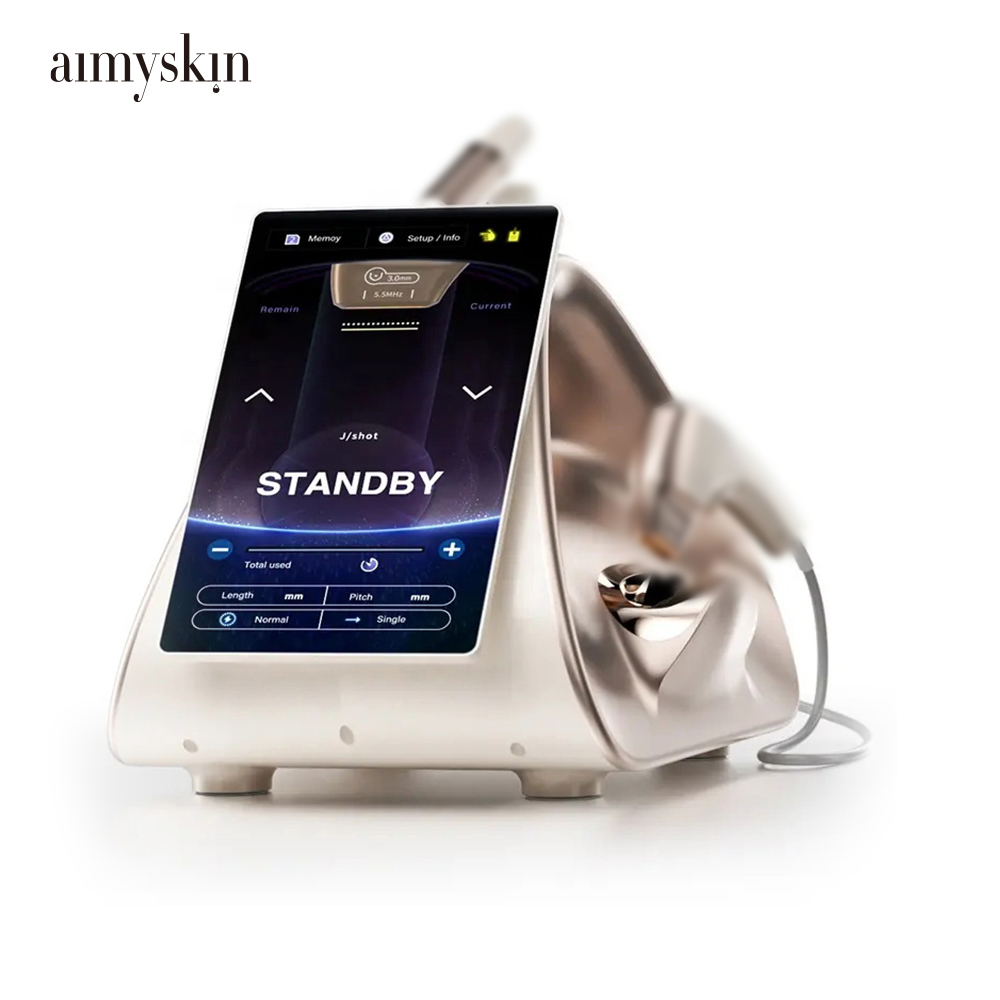
Business owners frequently face the dilemma of choosing between heavy-duty commercial consoles and smaller desktop units. High-volume salons require commercial-grade systems due to internal component durability. Commercial units house advanced cooling mechanisms, allowing them to run back-to-back sessions without overheating.
Portable or low-tier devices usually lack the robust power supplies needed for consistent energy delivery. Overheating leads to sudden shut-downs midway through a session. This interrupts the client experience and damages your professional reputation.
System Feature | Commercial-Grade Units | Portable/Low-Tier Units |
|---|---|---|
Cooling System | Advanced internal liquid or dual-fan cooling. | Basic heat sinks; prone to rapid overheating. |
Energy Output | Highly stable across thousands of consecutive shots. | Fluctuates as the internal temperature rises. |
Client Volume | Designed for 5 to 10 back-to-back daily treatments. | Suitable for occasional, light-duty applications only. |
Early ultrasound systems revolutionized aesthetic practices by introducing focused thermal energy without breaking the skin surface. However, older single-line systems required slow, tedious manual indexing. The operator had to physically move the handpiece millimeter by millimeter after every single pulse.
Modern engineering eventually introduced multi-line capabilities and macro/micro-focused ultrasound (MMFU) technologies. These advancements drastically reduced session durations. Instead of firing one single dot, newer transducers can deliver a rapid grid of coagulation points in a fraction of the time. This evolution minimizes operator fatigue and elevates the overall standard of care.
Integrating a 7D HIFU machine represents a massive leap in patient comfort and treatment versatility. This specific technology optimizes focal points for distinct anatomical depths. Micro-focused energy targets precise facial layers ranging from 1.5mm down to 4.5mm.
Conversely, the macro-focused transducers handle denser body tissues, penetrating up to 13mm deep. This dual-focus approach creates a highly customizable session. Furthermore, the rapid firing mechanism reduces the amount of time heat lingers near the nerve endings. Clients experience significantly less discomfort, eliminating the dread historically associated with deep-tissue tightening.
Stable energy output remains the absolute most critical factor in mitigating adverse clinical events. When a transducer fires, it must deliver the exact requested joules to the precise targeted depth. Inconsistent output risks creating dangerous grid-like burns on the epidermis or failing to reach therapeutic coagulation temperatures.
Quality systems maintain rigid energy protocols regardless of cartridge age. Predictable tissue coagulation ensures uniform collagen stimulation. When your device outputs erratic power, you gamble client safety during every pulse.
Selecting a reliable skin tightening machine requires a thorough review of available cartridge depths. A comprehensive protocol demands access to multiple anatomical planes. Treating only the superficial dermis yields temporary results, while targeting the SMAS (Superficial Musculoaponeurotic System) provides structural lifting.
Compare standard shot capacities carefully when evaluating a device. Some entry-level cartridges deplete after 10,000 shots. Premium variations routinely offer up to 20,000 shots before requiring replacement. This doubling of lifespan directly impacts your operational margins.
1.5mm Cartridge: Targets the superficial dermis to address fine lines and skin texture.
3.0mm Cartridge: Penetrates the deep dermis to stimulate profound collagen and elastin production.
4.5mm Cartridge: Reaches the foundational SMAS layer for definitive structural lifting.
8.0mm & 13.0mm Cartridges: Utilizes macro-focused energy for body contouring and denser fat deposits.
The internal ceramic transducer dictates the lifespan and safety of your cartridge. High-quality transducers prevent energy degradation over the entire life cycle of the consumable. Inferior ceramics often warp or degrade after a few thousand firings.
When a transducer degrades, it loses focal precision. Instead of creating a sharp, tiny dot of heat deep beneath the skin, it scatters energy unpredictably. Securing equipment built using medical-grade piezoelectric ceramics guarantees consistent therapeutic delivery from the first shot to the last.
A complicated, poorly translated software interface introduces significant operational risks. You need an intuitive touchscreen displaying clear visual maps of the treatment zones. Operators must easily monitor total shot counts, adjust power settings, and modify pitch control quickly.
Smart pitch control allows the aesthetician to dictate the exact spacing between individual coagulation points. This adjustment optimizes efficiency depending on the specific surface area. Pre-set clinical guidelines built into the software act as an excellent safety net, guiding newer operators toward standardized parameter ranges.
Never bypass regulatory due diligence when importing or purchasing aesthetic technology. Checking for FDA clearance, CE marking, or local equivalent certifications is a primary defensive strategy against liability. These insignias prove an independent body verified the engineering safety claims.
Best Practice: Always request physical or digital copies of regulatory certificates directly from the manufacturer. You should cross-reference registration numbers against official regulatory databases to confirm authenticity. Many budget imports falsely print certification logos on unverified equipment.
Regional licensing laws dictate exactly who can operate deep-tissue energy devices. Buyers must verify local regulations immediately. In some jurisdictions, standard estheticians can utilize these systems independently. In heavily regulated regions, only medical directors or specifically licensed nurses may legally fire the handpiece.
Purchasing advanced equipment before confirming your legal scope of practice often results in an expensive, unused asset sitting in a storage room. Consult your local cosmetology or medical board to clarify exact licensing prerequisites.
Operator fatigue leads to minor errors. Your chosen hardware must compensate by featuring redundant built-in safety protocols. Premium consoles utilize contact sensors within the handpiece. If the cartridge loses flush contact with the skin surface, the system automatically interrupts the energy sequence.
Clear error coding also defines a robust system. If a water circulation issue or an electrical fault occurs, the screen should display a precise diagnostic code. Auto-stop functions prevent accidental misfires when the handpiece remains stationary for too long, directly protecting the client from focal burns.
Mastering a high-intensity ultrasound system requires significantly more than a quick reading of the user manual. A reputable vendor must provide comprehensive clinical protocols. This includes detailed anatomical mapping, danger zone identification, and patient selection criteria.
Proper training transitions your staff from basic equipment operators to confident aesthetic specialists. When your team clearly understands how to layer depths safely, they deliver exceptional non-invasive face lifting outcomes. Without structured clinical education, operators frequently under-treat out of fear, resulting in unhappy clients seeing zero improvement.
Do not finalize a purchase without analyzing the Service Level Agreement (SLA). You need to know the exact resolution times for standard fault codes. If the central motherboard fails on a Friday morning, how quickly will the vendor dispatch a replacement part?
A strong warranty covers core components for at least one to two years. It should outline explicit steps for remote troubleshooting. Responsive technical support prevents minor software glitches from causing week-long operational delays. Protect your schedule by demanding clear post-sale communication channels.
Your beautiful new equipment becomes entirely useless if you cannot reliably source replacement cartridges. Relying on highly proprietary cartridges from a single overseas supplier introduces massive supply chain risks. Delays at customs or sudden manufacturing shortages leave you canceling fully booked appointments.
Investigate the vendor's local distribution network. Ideally, they maintain domestic warehouses carrying ample consumable inventory. Establish a steady, reasonably priced supply of replacements early. You should continuously keep backup cartridges in your clinic to buffer against unexpected shipping delays.
The ideal HIFU machine seamlessly combines stable energy delivery, predictable consumable logistics, and rigorous vendor support. Selecting the right hardware protects your client base while establishing a highly profitable revenue stream. Advanced modalities require precise engineering to ensure structural facial lifting safely.
Take actionable steps before signing any purchase order. First, demand comprehensive clinical before-and-after data directly linked to the specific model you intend to buy. Next, run an internal profitability calculator factoring in your local clinic volume and the exact cartridge capacities. Finally, book a live demonstration to physically assess the interface, transducer quality, and handpiece ergonomics. These proactive measures guarantee a confident, lucrative addition to your aesthetic practice.
A: Equipment pricing varies drastically based on engineering quality. Budget-tier imported units represent the lowest initial capital but often lack regulatory clearances and robust internal cooling. Premium, regulatory-cleared commercial devices require a significantly higher investment. These premium systems include advanced MMFU technology, extended warranties, and comprehensive clinical training, ensuring operational longevity.
A: Practitioners must enforce strict patient selection. Standard exclusions include treating over active acne lesions, open facial wounds, or areas containing metal implants and pacemakers. Additionally, clients exhibiting severe skin laxity or significant underlying structural volume loss may require surgical intervention rather than deep-tissue ultrasound therapies.
A: Cartridge lifespan depends entirely on the total shot capacity and your clinic's volume. A typical full-face session consumes several hundred shots distributed across multiple depth cartridges. If a cartridge holds 20,000 shots, it will service numerous clients before depletion. The software interface tracks this usage, alerting operators before the final shot.
A: No. Regulatory frameworks vary immensely depending on your specific state or country. Certain regions allow licensed estheticians to perform treatments following certified manufacturer training. In stricter jurisdictions, only licensed medical professionals or personnel working under a direct medical director can legally operate deep-tissue ultrasound modalities.


